The Hardware Layer That Never Stops Watching
Hardware endurance requires active protection. The Zyntra BMS is a high-fidelity monitoring layer tracking electrical parameters continuously.
Safety and performance data both, not one at the expense of the other.
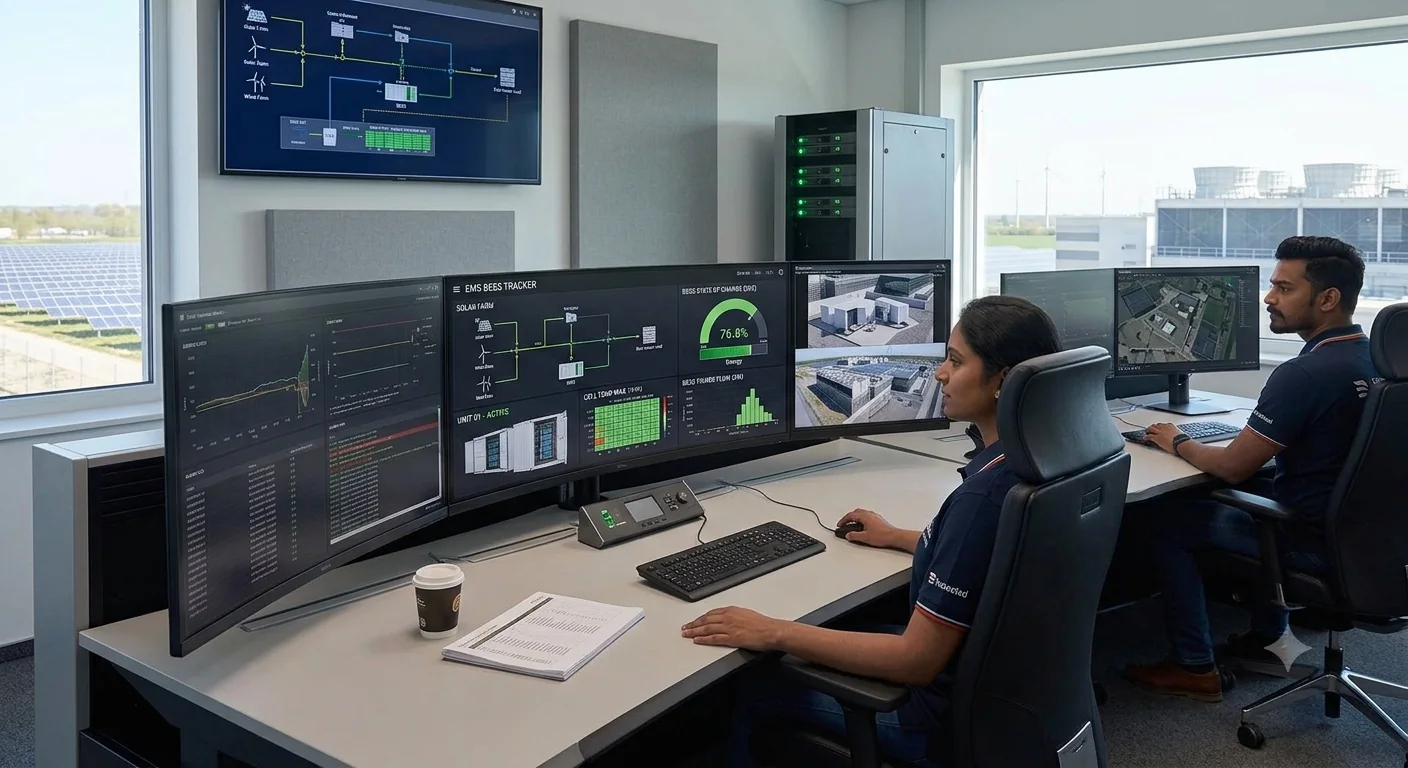
Introduction
Protection loops at cell level, running non-stop.
Every Zyntra module runs an onboard microprocessor array executing non-stop protection loops at cell level.
Warranty condition
The BMS isn’t an add-on to the cell. It’s the condition the cell is warrantied under.
Operating cells without a verified, company-certified BMS voids all product warranties.
Protection Functions
Three loops that run whether or not anyone is watching.
01
Dynamic over/under voltage cutoffs
Cell voltage is tracked continuously down to individual cell level, with automated cutoffs scaling precisely based on nominal pack voltage — 12.8 V, 24 V or 51.2 V configurations — protecting cells against permanent capacity loss from over- or under-voltage events.
02
Sub-zero charging prevention
Charging LFP cells below 0°C (32°F) internal core temperature triggers destructive lithium plating across the anode separator, leading to rapid capacity decay or sudden mechanical short-circuit.
The BMS blocks charge current instantly below 0°C unless the system is protected by an active environmental heating enclosure — the specific approach used on ZYN-I160, the ruggedised pack built for extreme outdoor conditions.
03
Predictive impedance cross-balancing
Mixing cells across manufacturing lots, weight variants, or calendar ages unbalances a system’s safety and capacity delivery. The BMS applies continuous cell balancing to keep matched lots aligned.
Monitoring
Safety and performance data from the same telemetry stream.
The same telemetry stream that drives the protection functions above also produces the performance record: continuous voltage and impedance tracking builds a running State-of-Health profile per cell, not just a pass/fail safety signal.
That data is what surfaces early degradation trends — impedance drift, cell imbalance forming before it becomes a fault — well ahead of any risk to the system, and it’s the same dataset that gets referenced during warranty or service review.
Safety
Enforcement that doesn’t depend on software or connectivity.
The BMS enforces its protection thresholds independently of the EMS or any network connection — voltage cutoffs, sub-zero blocking and cell balancing run at the hardware layer regardless of software or connectivity state.
This is also the compliance boundary referenced in the warranty terms: certified BMS operation is a condition of coverage, not an optional safety feature.
Protection Thresholds
What the hardware layer enforces.
Summarised from the protection functions above. Exact cutoff voltages are configuration-specific and are stated on each product datasheet.
Enforcement layer
Hardware. Runs independently of the EMS and of any network connection.
Voltage protection
Continuous per-cell tracking with automated over- and under-voltage cutoffs, scaled to nominal pack voltage (12.8 V, 24 V, 51.2 V).
Sub-zero charge block
Charge current blocked instantly below 0°C (32°F) internal core temperature.
Sub-zero exception
Systems with an active environmental heating enclosure — the approach used on ZYN-I160.
Cell balancing
Continuous predictive impedance cross-balancing across matched lots.
Health record
Running State-of-Health profile per cell from voltage and impedance tracking.
Warranty condition
Certified BMS operation is a condition of coverage. Operating cells without a verified, company-certified BMS voids all product warranties.
Every Zyntra and Zyntra+ product runs this protection layer.
The chemistry this layer protects is lithium iron phosphate; the software layer that schedules a protected pack is the EMS.
Get started
Talk to Our Engineers
Protection architecture, cutoff behaviour, or how the health record is used at service review — ask directly.