Storage. Engineered.
The hardware, control loops, and software frameworks turning volatile ambient power into dependable, infrastructure-grade capacity.
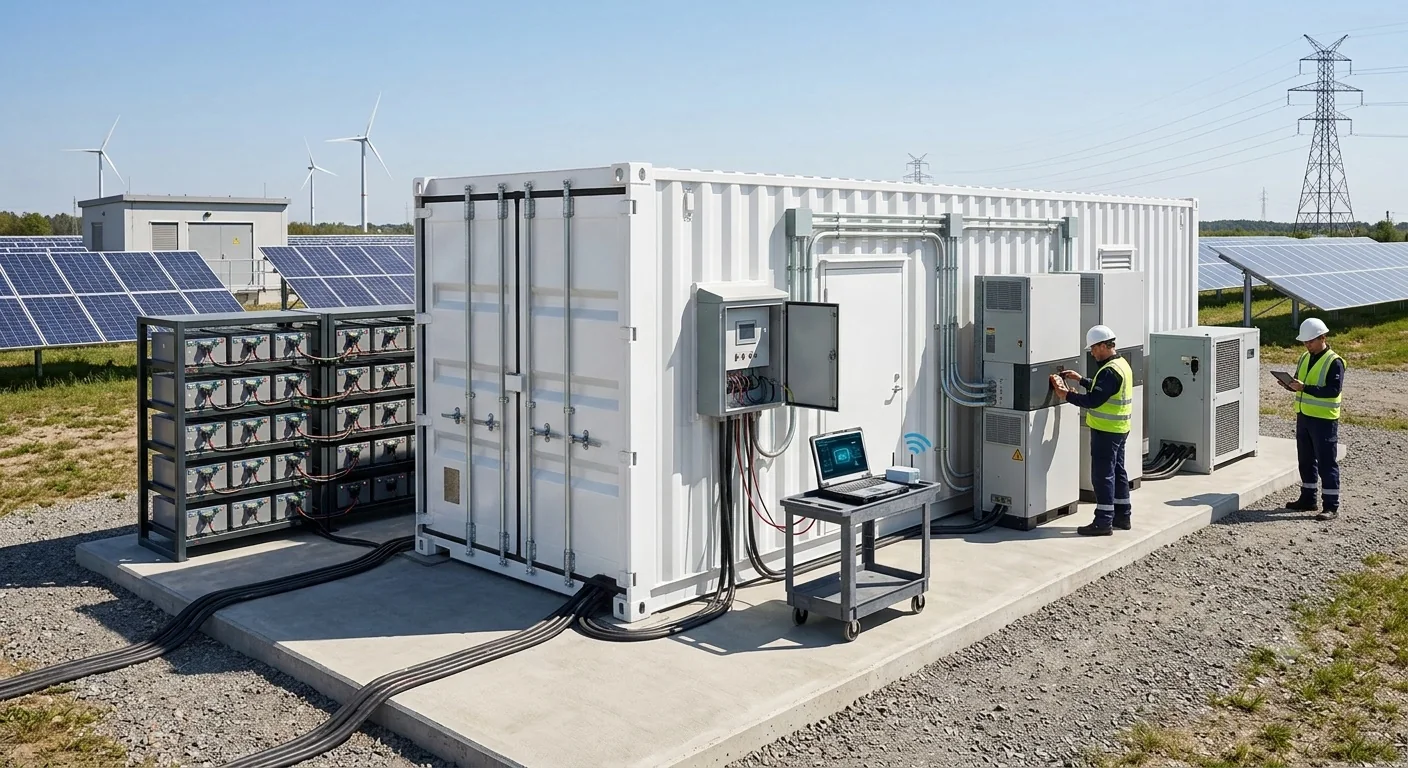
A home battery and a grid-scale container run the same core engineering, scaled.
Storage Engineering Philosophy
Three layers, consistent across the entire product line.
Every Zyntra and Zyntra+ system is built on the same three-layer architecture: a chemistry layer (LFP) chosen for stability rather than energy density alone, a hardware control layer (BMS) that protects the cell physics from misuse, and a software layer (EMS) that turns a protected asset into a managed, yield-generating one.
The layers are consistent across the entire product line — a home battery and a grid-scale container run the same core engineering, scaled.
The three layers
What each layer decides
Layer 1 · Chemistry
LFP
Core Chemistry
Lithium Iron Phosphate, selected exclusively for stationary applications over cobalt-based mobile chemistries. Stable at temperatures where other lithium chemistries begin to fail, with no cobalt or nickel dependency.
Explore LFP chemistryLayer 2 · Control
BMS
Control Layer
The hardware layer that keeps every cell inside its safe operating envelope — voltage cutoffs, temperature gating, and cross-cell balancing, running continuously whether or not anyone is watching.
Explore the BMSLayer 3 · Software
EMS
Software Layer
The layer that turns protected hardware into a managed asset — tariff arbitrage, peak shaving, remote site management, and the data sovereignty framework all of it runs inside.
Explore the EMSLooking for system protocols and hardware safety data sheets?
Download Technical Integration SpecWhy Our Technology
Four engineering decisions, made deliberately.
01
Chemistry chosen for stability
Not just spec-sheet energy density. A fixed installation needs a cell that holds its structure for fifteen years, not one that wins a density benchmark.
02
Hardware protection independent of software
The BMS enforces safety limits even if the EMS or network connection fails.
03
Software that reduces O&M
Not just backup runtime — remote management is a cost line, not a feature checkbox.
04
Compliance built in, not bolted on
Open protocols and a software-upgradable architecture, not a hardware replacement cycle every time a standard changes.
Get started
Talk to Our Engineers
Bring us the load, the site and the compliance regime. We will tell you what the engineering can and cannot do before anyone quotes anything.