Off-Grid Resilience, Engineered Into Every Container
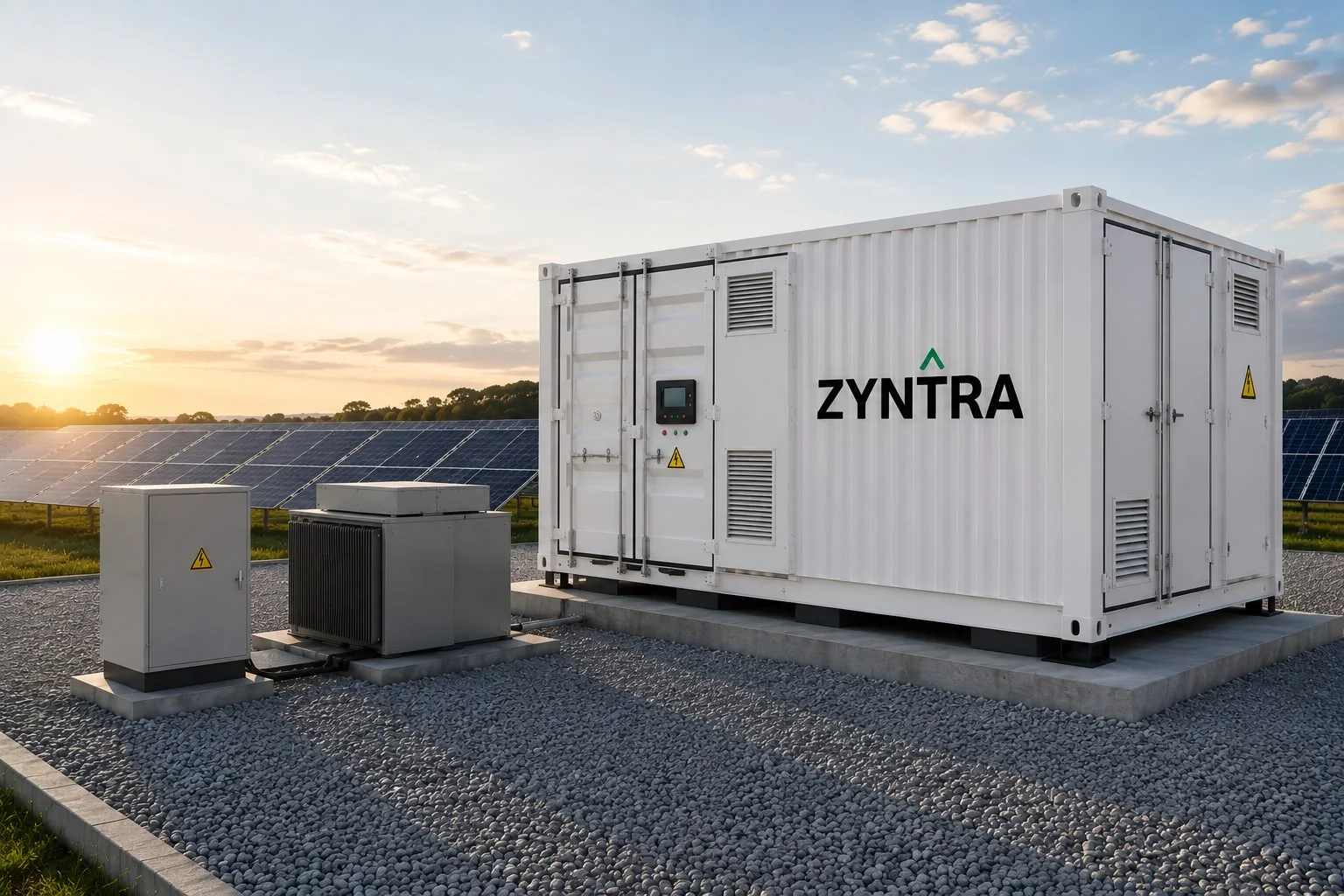
Engineered for off-grid autonomy. Built for zero-fuel resilience, rugged durability and dependable performance in remote conditions.
What actually keeps a remote-site or defence procurement officer awake at night.
Industry Challenges
The problem, as the buyer states it.
What actually keeps a remote-site or defence procurement officer awake at night.
01
Diesel dependency
Fuel logistics to a remote site are expensive and volatile — every convoy is a cost and, at a defence site, a security liability in itself.
02
No second chance at reliability
There's often no grid to fall back on and no easy service visit if something fails — the margin for error is far smaller than at a grid-connected site.
03
Supply chain sovereignty
For defence and mission-critical sites, dependency on a foreign or opaque supply chain is a security risk, not just a cost one.
04
Environmental punishment
Dust, extreme heat, and remote installation conditions degrade equipment built for standard environments.
EPC Contractor
The EPC's remote deployment problem
A plug-and-play design that assumes urban access doesn't survive contact with an actual mine site.
How ZYNTRA+ Solves Them
Five platform capabilities, applied to this segment.
01
Energy Arbitrage
Excess daytime solar or wind generation is stored rather than curtailed, directly displacing diesel runtime later — value captured even without a tariff market to arbitrage against.
02
Peak Shaving
Sudden generation ramp-rate shifts and facility load spikes are absorbed without oversizing the diesel genset to cover worst-case demand.
03
Grid Stability
Grid-forming smart inverters manage autonomous islanding, transitioning cleanly during central grid drops with smooth voltage regulation and frequency control — no synchronous generation support required, and no dependency on an external network at all if there isn't one.
04
Regulatory Readiness
Where a site is partially grid-tied, the same software-upgradable EMS adapts to local interconnection standards as they evolve, without a hardware swap.
05
Engineering Flexibility
Pre-integrated systems connect cleanly to existing solar, wind or diesel infrastructure with minimal field modification — not a full redesign.
Recommended Products
The specification lives on the product page.
This page makes the case for the segment. The engineering proof — form factors, configurations, protection architecture — sits where it belongs.
Utility BESS
For larger-scale microgrid and grid-forming deployments.
Utility scale battery energy storage systemC&I BESS
For smaller-footprint remote or distributed sites.
Commercial and industrial battery storageBoth containerised and modular configurations deploy into microgrid contexts depending on scale; an engineering review confirms the right fit for your generation mix and load profile.
Why Us
What carries the project after the tender closes.
01
Engineering Support
Custom system configurations are managed by a specialised project execution team, with design validation moving to physical layout under strict SLAs matched to local grid rules.
02
Proprietary In-House EMS
Balances solar, wind and battery blocks autonomously — pre-coded logic manages load distribution without third-party software dependency.
03
Make in India
Domestic integration bypasses overseas logistics holdups, insulating remote facilities from supply constraints, backed by an upcoming 3 GWh manufacturing line.
04
Data Protection
Operational parameters stay secured behind local encrypted connections, matching strict security and compliance profiles.
05
Life Cycle Support
Rated for up to 8,000 charge cycles, maintained under continuous cycling, with dedicated field service reaching remote sites directly from regional hubs.
FAQ
Frequently asked questions
Yes — grid-forming smart inverters manage autonomous islanding, providing voltage and frequency control without synchronous generation support.
LFP chemistry was selected specifically for thermal stability in ambient heat, and enclosures are rated for dust and moisture ingress without climate control — the same conditions proven across 500 unattended rural sites in the Uttar Pradesh deployment record.
Remote monitoring flags most faults before they become visible on-site, and the BMS's hardware protection layer acts independently of connectivity — it doesn't need a live network link to keep the pack safe. Field response follows the same tiered service model as the rest of the range.
Cell packaging, integration and testing happen in India, backed by an upcoming 3 GWh domestic manufacturing line — built specifically to reduce exposure to import delays, shipping disruption and currency risk on public and remote-site programmes.
Get started
Design Your Microgrid
Engineered for off-grid autonomy. Built for zero-fuel resilience, rugged durability and dependable performance in remote conditions.